Voice-over services have become an essential part of modern communication. Whether it’s for commercials, e-learning, documentaries, audiobooks, podcasts, or dubbing, the voice you choose will directly shape how your message is perceived. Hiring the right professional voice-over service is not just about finding someone with a pleasant tone—it’s about securing a partner who understands your brand, your audience, and the technical standards required for flawless delivery.
In this guide, we’ll explore the key considerations when hiring a voice-over service and how to make the best decision for your industry.
1. Defining Your Needs Clearly
Before you start searching for a voice talent or voice-over recording services, you need to define your exact needs:
– Purpose of the project: Is it for a commercial ad, an e-learning module, or a documentary narration? Each requires a unique vocal style.
- – Target audience: Who will be listening? The tone for a children’s audiobook is completely different from a corporate training video.
- – Languages required: Do you need multilingual voice-over or just one language? Many companies now require translation and localization services to adapt their message globally.
Clarity at this stage helps avoid wasted time and ensures you connect with the right voice-over agency.
2. Evaluating Voice Talent and Demos
The voice itself is the most crucial element. A professional voice talent should offer:
- Versatility: The ability to adapt tone, pacing, and style for different types of voice-over projects.
- Experience: Look for artists with a portfolio of professional voice-overs across industries.
- Samples and demos: Always request a voice reel to hear how they perform in real scenarios.
Remember, the best voice-over artist is not only someone with a nice voice, but someone who can interpret your script and bring emotion, clarity, and authenticity.
3. Quality of Recording and Technical Expertise
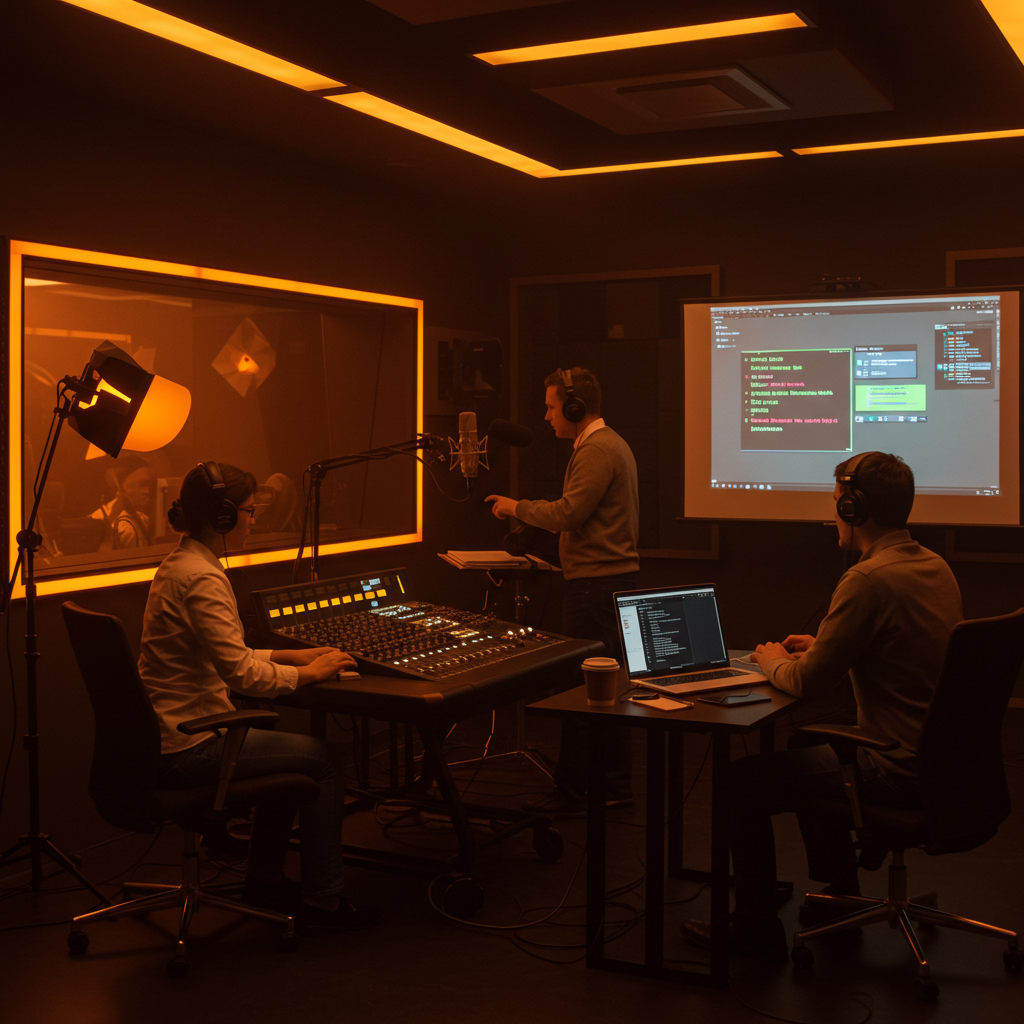
High-quality audio is non-negotiable. A great performance can be ruined by poor sound quality. When assessing voice-over services, check if they provide:
- – Professional recording studios with the right acoustic treatment.
- – Sound engineering teams for audio editing, mixing, and mastering.
- – Support for voice-over recording services that meet industry standards for commercials, e-learning, or broadcast.
Some agencies also offer voice-over translation services, where translation, voice recording, and lip-sync dubbing are handled in-house to guarantee synchronization and quality.
4. Translation and Localization Capabilities
In today’s global market, many brands need voice translation services in addition to voice-over. When choosing a provider, ask:
- – Do they offer professional translation services alongside voice work?
- – Can they handle English to Arabic translation services, Arabic to English voice translation, or other language combinations?
- – Do they provide localization translation—adapting cultural nuances, tone, and idioms?
The ability to combine translation and localization services with voice acting services creates a smoother workflow and consistent brand voice across multiple markets.
5. Pricing and Value
Voice-over cost varies widely based on language, experience, usage rights, and project complexity. While you may find cheaper voice-over gigs online, it’s important to focus on value rather than cost alone. Consider:
- – Professional voice-over services usually include script adaptation, high-quality audio, and post-production.
- – Low-cost services may compromise on translation accuracy, sound editing, or deliver files that don’t meet broadcast standards.
A trustworthy translation and localization agency or voice-over firm should be transparent about rates and deliverables, ensuring you know exactly what you’re paying for.
6. Reliability, Workflow, and Customer Support
The final consideration is reliability. A good voice-over company should provide:
- – Dedicated project managers to coordinate translation, recording, and editing.
- – Clear workflow and milestones to track project progress.
- – Quality control teams to check pronunciation, clarity, and synchronization.
- – Strong after-sales support, ensuring revisions or corrections are handled promptly.
Hiring a professional translation and voice-over provider means you’re not just buying a voice—you’re investing in a streamlined process that guarantees accuracy, cultural relevance, and emotional impact.
FAQ
Q1: What industries benefit most from voice-over services?
A: Industries such as advertising, e-learning, entertainment, gaming, corporate training, and audiobooks heavily rely on voice-over services.
Q2: How much do professional voice-over services cost?
A: Prices vary depending on project type, length, and language. Always check what’s included: voice talent, translation, sound editing, or dubbing.
Q3: Can one company provide both translation and voice-over?
A: Yes, many agencies like Linguavoice Studio specialize in translation and localization services alongside professional voice-over.
Q4: What’s the difference between dubbing and voice over?
A: Voice over simply overlays a new voice track, while dubbing replaces the original dialogue, requiring lip-sync accuracy.
Q5: How do I choose the right voice for my project?
A: Listen to demos, evaluate emotional range, and ensure the style matches your target audience and brand tone.