
The Sound of Truth: Why the Human Voice Will Always Reign Supreme
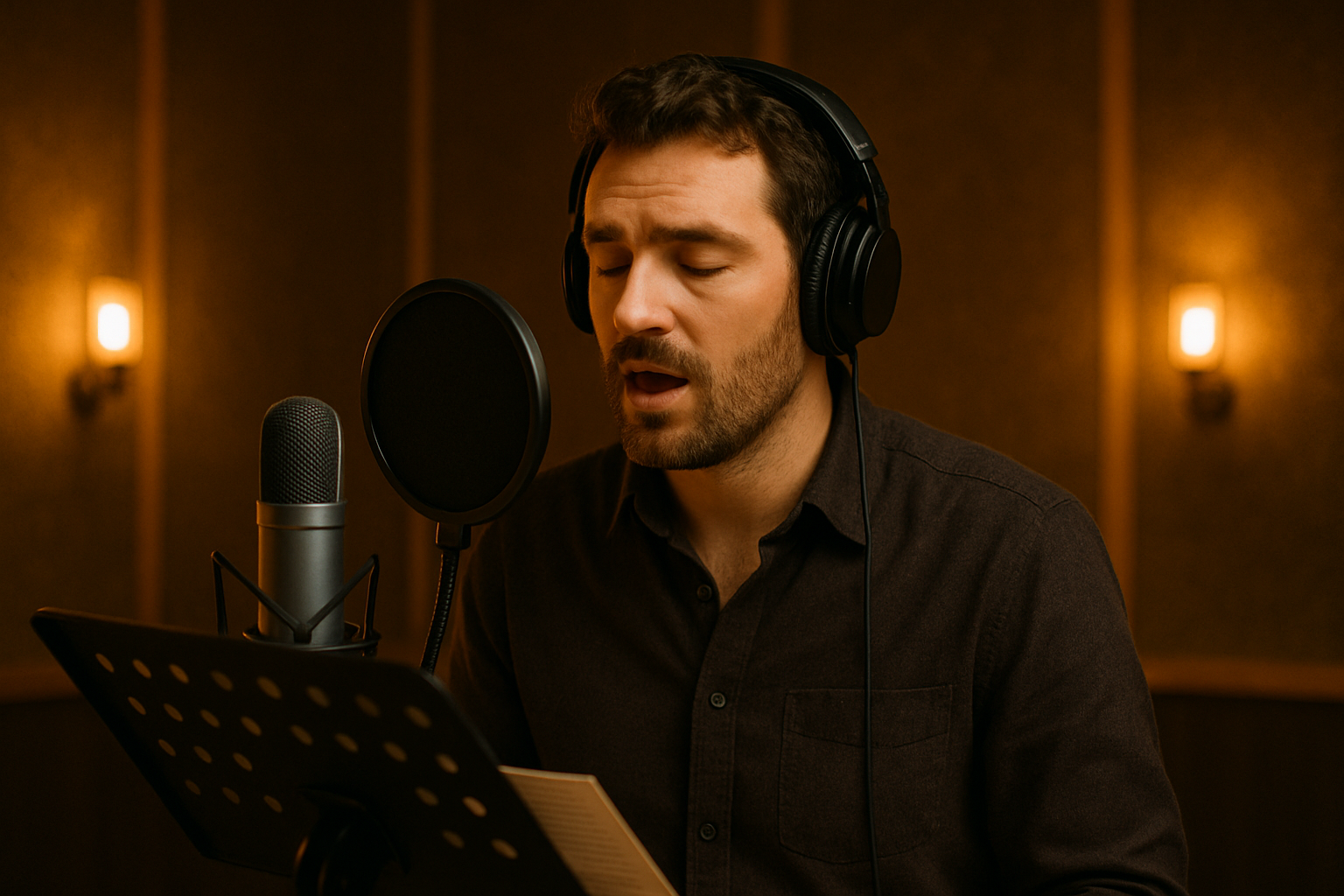
The Pulse Behind Every Word
In every great story ever told, there is a heartbeat that doesn’t come from the script or the microphone, but from the person behind it. That heartbeat is the human voice. Long before technology learned to mimic sound, humanity had already mastered the art of expression through tone, pause, and breath. In an age where sound can be copied and reshaped endlessly, the genuine emotional voice acting of a trained narrator still holds the listener’s soul in its grip.
Because authentic narration is not merely about clarity or precision it’s about truth. The human voice does not just speak words; it feels them. It trembles when the heart breaks, brightens when hope returns, and pauses when words fall short. This emotional honesty forms the foundation of human voiceover impact, something no synthetic replica will ever truly capture.
This is the heart of the debate: AI voice vs human voice. And every time emotion matters, the human voice wins.
The Art of Authentic Narration
[Image of a storyteller speaking to an attentive audience, illustrating emotional connection through voice]
There is a sacred intimacy in storytelling, a shared understanding between the teller and the listener. Authentic narration taps into this connection by blending empathy, memory, and imagination. When a professional voice artist steps behind the mic, they bring years of experience interpreting human emotion. They do not simply read a script; they live it.
Listeners subconsciously sense this authenticity. A voice that hesitates slightly in grief or lifts gently in joy signals to the listener that something real is happening. These nuances the inhale before a revelation, the softened tone of affection, the lingering silence after a confession cannot be programmed. They are born of vocal performance depth, molded by lived experience and emotional truth.
A good story can be written. But a great story must be spoken by someone who feels it. That is the magic of human narration.
Voice Talent Nuance: Where Perfection Meets Emotion
There’s a unique paradox in professional voice artistry: perfection often lies in imperfection. A flawless, overly consistent tone might impress the ear, but it rarely touches the heart. Human narrators instinctively weave subtle variations in pitch, rhythm, and pace, giving texture to what would otherwise be a flat performance.
This quality voice talent nuance is what turns an advertisement into a memory or a documentary into an emotional journey. The quivering in a line of fear, the warmth of reassurance in a public announcement, or the sincerity in a brand message all rely on the artist’s ability to feel first and speak second.
These organic fluctuations in tone reflect the unpredictable rhythms of human emotion. They allow the listener to experience vulnerability, confidence, excitement, or compassion all within a few sentences. The result? Professional voice artistry that leaves a lasting mark because it sounds real.
Audio Storytelling Connection: The Science of Trust
Our brains are wired to respond to voices, not just any voices, but human ones. Studies in psychology and neurolinguistics consistently reveal that listeners place higher levels of trust in narration when it carries natural inflection, warmth, and authenticity. The brain recognizes human emotion not only through words but through tone and resonance.
This is what makes audio storytelling connections so powerful. When a listener hears genuine emotion, the brain releases oxytocin, the same hormone linked to empathy and bonding. In other words, an authentic human voice literally creates connection on a biological level.
That connection builds trust. Whether in e-learning modules, film narration, commercials, or podcasts, the presence of a real voice reassures the listener that another human is guiding them, not just reciting lines. This emotional reliability strengthens brand loyalty, enhances message retention, and transforms passive listening into meaningful engagement.
Trust in Narration: The Heartbeat of Communication
At the core of all communication lies one simple truth: people believe people. No matter how refined technology becomes, audiences crave the warmth of human imperfection. A slight rasp in the throat, the spontaneous laugh mid-sentence, or the steady calm of reassurance these are signals of trust in narration.
Brands and creators who use genuine voice talent are not merely selling a message they’re sharing a heartbeat. They acknowledge that humans want to be spoken to, not at. The human narrator acts as a bridge, translating emotion into sound and meaning.
This is particularly crucial in fields where credibility is everything—education, healthcare, advocacy, and advertising. When the voice sounds human, it feels trustworthy. And in the marketplace of sound, trust is priceless.
Vocal Performance Depth: Emotion as an Instrument
Professional voice actors do more than articulate they orchestrate. Their craft combines timing, rhythm, and texture in a symphony of feeling. This vocal performance depth transforms even the simplest sentence into a moment of truth.
Imagine an audiobook narrator describing heartbreak. The listener doesn’t just understand the emotion—they feel it through the tremor in the performer’s tone. Or think of a commercial where a calm, confident voice invites you to believe in a product or a cause. That emotion is not manufactured; it’s drawn from genuine empathy.
Behind every skilled performance lies a trained understanding of pacing, breathing, and silence. Silence, in particular, is a powerful tool used not as emptiness, but as anticipation. It allows meaning to resonate. And that resonance, that fragile stillness between words, is what technology will never master.
How to Use the Human Voice to Outshine AI
1. Speak with Emotion, Not Perfection
AI aims for flawless delivery humans aim for connection. The tiny imperfections in tone or rhythm are what make a voice believable. When narrating, lean into emotion: let your tone rise with excitement, soften in empathy, and hesitate when words carry weight. Those subtle shifts are what create real human voice advantage.
2. Build Cultural Nuance
A professional voice artist doesn’t just pronounce words they understand context.
They know when warmth sounds respectful, when silence speaks louder than words, and when humor needs local rhythm. Authentic voice-over work lives inside culture, not outside it. AI may know language rules, but it doesn’t know how people feel them.
3. Use Your Voice to Build Trust
Humans are wired to trust what sounds human. Studies in neurolinguistics show that natural inflection and warmth increase the “connection hormone.”
That means a real voice doesn’t just deliver information; it builds relationships. For brands, e-learning, or storytelling, this makes human narration a business advantage, not just a creative choice.
4. Make Silence Part of the Story
AI fills every gap perfectly but humans know that silence can speak louder than speech. Professional narrators use pauses to create anticipation, meaning, and impact.
A moment of stillness lets emotion settle, giving your audience time to feel, not just listen.
5. Let Authenticity Be Your Signature
The future doesn’t belong to the loudest voice, it belongs to the most believable one.
When you speak with genuine emotion, vulnerability, and presence, people remember you, not the machine. Every voice-over, brand message, or story becomes a signature that can’t be replicated.
The Irreplaceable Human Resonance
The world may continue to explore countless ways to imitate sound, but imitation cannot replace experience. The human voiceover impact remains rooted in empathy and emotion, speaking not only to the ear but directly to the heart.
Authentic narration and emotional voice acting remind us that every tone, breath, and pause carries history. It carries love, fear, hope, and honesty. These are not things that can be engineered, they must be felt.
So as storytelling continues to evolve, one truth will remain: the human voice is eternal. It is the original sound of connection and the one that will echo longest in the human heart.
The Human Touch Behind Every Word
In a digital age obsessed with automation, authenticity is the new luxury.
The difference between AI voice and human narration isn’t just quality, it’s credibility. A real voice carries empathy, vulnerability, and trust. These are the emotions that move hearts, change minds, and sell stories.
That’s exactly what LinguaVoice delivers.
we translate emotion across languages, preserve cultural nuance, and give every brand its authentic human voice.
Because at LinguaVoice, we believe the most powerful sound in the world is still and will always be the human one.
Bring Your Story to Life with Lingua Voice
At LinguaVoice, we believe that every brand, film, and message deserves a voice that feels human.
Our team of professional narrators and voice artists don’t just record words, they interpret emotions, build trust, and breathe life into your message.
Whether you’re crafting a commercial, a documentary, or a brand story, LinguaVoice ensures your audience doesn’t just hear you, they feel you.
Further Reading and Academic Insight
- Book: “The Voice Within: The Psychology of Vocal Emotion” by Dr. Eleanor Caston. Oxford University Press, 2019.
Explores how emotional vocal delivery enhances memory retention and listener empathy in modern storytelling.
🔗 https://global.oup.com/the-voice-within-caston - Academic Journal Article: “Resonance and Trust: Neurocognitive Responses to Human Vocal Patterns” by Dr. Luis Mendez, Journal of Cognitive Communication Studies, Vol. 14, No. 2 (2021).
Provides evidence that authentic human narration increases oxytocin release and emotional engagement in listeners.
🔗 https://www.jccs-journal.org/articles/2021/resonance-and-trust-mendez - Industry White Paper: “The Future Speaks Human: Why Brands Need Genuine Voices” by The Global Voice Talent Association (GVTA, 2023).
Analyzes consumer response data showing a 63% increase in trust and retention when real voice artists are used in media campaigns.
🔗 https://www.gvta.org/research/future-speaks-human-2023